
Equity-focused schemes may perform better in a bull market, while debt-oriented ones may offer greater stability during volatile periods.

Annapoorna chain of restaurants owner Srinivasan is seen purportedly highlighting concerns over varying GST rates. In the second video, Srinivasan was seen purportedly apologising in person to the Finance Minister.

Proliferation of home chargers of around 7 KWh and above, which take six to seven hours to fully charge a car depending on the model, bring running costs down by a third or so. That, coupled with the increasing range of modern electric cars, can lead to a massive increase in sales.

The Income Tax department on Friday moved the Delhi High Court seeking "directions/clarifications" of the December 12 order by which the assets of mobile phone handset maker Nokia in India were defreezed.

The scheme offers waiver of interest, penalty, and prosecution for settling tax disputes.

The bench was hearing a Public Interest Litigation (PIL) challenging the State Government's decision to retrospectively reduce the rate of police protection provided during the IPL matches. The PIL was filed by RTI Activist Anil Galgali.

'You may see some movement indicating a simpler tax regime with less exemptions but with fewer tax rates making life simpler for taxpayers.'

Competition in the fast-growing quick commerce sector is heating up as Swiggy Instamart faces a tough challenge in narrowing the gap with Blinkit, which currently dominates the market. In the second quarter (Q2) of 2024-25 (FY25), Instamart's gross order value (GOV) rose by 42.1 per cent quarter-on-quarter (Q-o-Q) and 75.5 per cent year-on-year (Y-o-Y), reaching Rs 3,382 crore.

Ask rediffGURU and PF expert Nitin Narkhede your mutual fund and personal finance-related questions.

The government's initiative to migrate SEZ data from NSDL software to ICEGATE system for streamlined reporting of import data caused double counting of gold imports, resulting in inflated figures and the issue has now been largely rectified, government sources said. The downward revision has provided the actual picture of trade deficit (difference between imports and exports), which was earlier looking very high. The deficit for November will now be revised downwards from $37.84 billion to about $32.8 billion. Similarly, there will be a revision in overall import numbers as well.

Hitting out at Prime Minister Narendra Modi over the issue of tax cuts on petroleum products, Tamil Nadu Chief Minister M K Stalin on Thursday said people were aware of the fact behind the issue and pointed out at his government effecting a Rs 3 a litre cut on petrol earlier.

The government on Friday extended he deadlines for various income tax compliances and said the amount paid by an employer to employees for Covid-19 treatment would be tax exempt.

'Subject to any worldwide economic collapse.'

After a prolonged winter, the Indian edtech sector seems to be witnessing some signs of a thaw. The sector has received $608.8 million of funding across 68 deals in 2024 so far - 153 per cent more than the $240.9 million across 106 deals during the same period last year - according to data from market intelligence platform Tracxn.
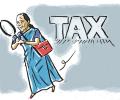
The Vivaad se Vishwas Tak scheme will be one area where some much-needed revenue can be collected by the government. The scheme can be more successful if some specific steps are taken, says investment advisor Harsh Roongta. This results in a very high tax demand. Investment advisor Harsh Roongta takes you through the maze of appeals and counter appeals.

The government on Tuesday extended till March 15 the deadline for corporate to file Income Tax returns for the fiscal ended March 2021. The deadline to file tax audit report and transfer pricing audit report for 2020-21 fiscal too has been extended till February 15. This is the third extension given to corporate for filing the income tax return for 2020-21 fiscal.

The Central revenue department is inquiring into the payment of service tax by the event management firm which had organised the controversial Thinkfest on behalf of the Tehelka magazine.

Several leading scientists, academicians, and agriculturalists have called for raising government support for research and development to make Indian agriculture future-ready.
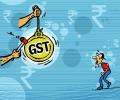
Over 100,000 small and medium-sized businesses are non-compliant with e-invoicing norms under the goods and services tax (GST) regime, a mandatory requirement for businesses with an annual turnover of over Rs 5 crore. E-invoicing provides real-time access to invoices that are prepared by the supplier on the purchase of goods, allowing faster accessibility to input tax credit, thereby limiting the manipulation of fake credit as it has to be generated before the transaction. "The default has been reported mainly in businesses with a turnover between Rs 5 crore and Rs 20 crore," a senior official informed

Overall market reaction to the Budget was neutral. Investors absorbed the changes to the tax rates (positive for salaried class) and capital gains taxes (CGTs, negative due to the removal of indexation and increases. Other proposals largely pertain to supporting rural development, buybacks taxed as dividends, Custom duty changes that impact multiple sectors, higher outlays for clean energy, etc. There's some moderation in the growth of capex outlay across defence, fer

'Investors with foreign currency-denominated goals, such as foreign education or foreign travel, should go for US equity funds.'
